

The Weakest Link Has a Keyboard
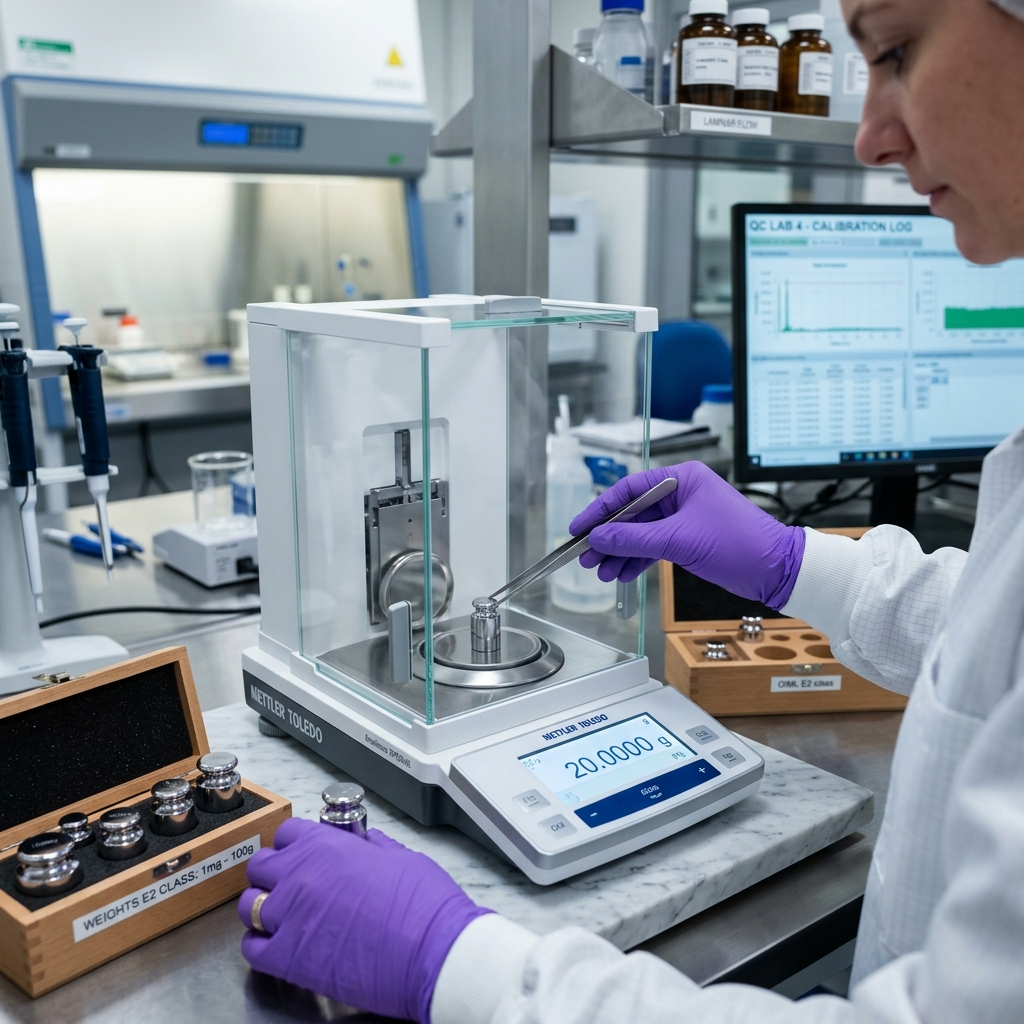
Ask a laboratory where its data integrity risk sits and the answer usually involves access control, audit trails, or signature workflows. Those matter. But the most common point of failure is more mundane: a person reading a value from an instrument display and typing it somewhere else.
Every control downstream of that moment - the audit trail, the review, the approval, the signature - faithfully preserves whatever was typed. If the transcription was wrong, the system will defend the wrong number with complete documentary rigour.
Attributable, Legible, Contemporaneous, Original, Accurate
ALCOA+ principles are usually discussed as documentation practice. Applied to transcription, they read as an indictment. A hand-keyed result is not original - it is a copy. It is rarely contemporaneous, since entry often happens after a run completes. Attribution records who typed it, not who or what generated it. Accuracy depends entirely on human care at a moment when the analyst is likely doing three other things.
Direct instrument capture satisfies all five properties structurally. The result in the LIMS is the result the instrument produced, time-stamped when it was produced, attributed to the instrument, the method, and the analyst who ran it.
Error Rates Scale With Volume
Transcription error rates are low per event and unavoidable in aggregate. A laboratory processing a few hundred results a month can compensate with careful review. A QC operation running a fleet of instruments across multiple sites - a hundred and fifty devices is not unusual in process manufacturing - cannot. The arithmetic is unforgiving: a small per-entry error rate multiplied by a large volume produces a steady stream of findings.
This is why integration should be scoped by volume rather than by instrument prestige. The high-throughput balance may deserve integration before the expensive spectrometer that runs twice a week.
What Integration Actually Delivers
Direct capture from chromatography systems, spectrometers, and balances into the LIMS removes manual entry from the results pathway. Barcode or QR-linked transfer ties each captured result to the correct sample without the analyst selecting it from a list - which is itself a well-known source of misassignment.
Specification limits applied at the point of entry give the analyst an out-of-specification indicator immediately, while the sample and the context are still available. A deviation caught at the bench costs a fraction of one caught at review.
The audit trail then reflects reality rather than reconstruction: which instrument, which method, which standard, which analyst, at what time - captured automatically because that is how the data arrived.
Integration Beyond the Bench
The same principle extends past instruments. Where the LIMS connects to ERP, sample and batch information stays aligned with enterprise records instead of being maintained twice. Where it connects to a document management system, test execution references the current approved method, which eliminates deviations caused by working from a superseded version. Where it connects to plant process data, quality results become an input to production optimization rather than a terminal record.
Each of these is the same control applied at a different boundary: wherever data would otherwise be re-entered by a person, an interface removes both the labour and the error class.
Phasing a Large Integration Programme
Integrating a large fleet is rarely a single project. A workable sequence is to start with the highest-volume instrument classes, prove the interfacing pattern and its validation approach on those, then extend outward by class rather than by laboratory. Instruments of the same model share an integration pattern, so the second one costs far less than the first.
Validation deserves planning at the same time. Interfaces fall within the validated scope of the system, and IQ/OQ/PQ documentation should cover them alongside core functionality rather than as an afterthought once inspection is scheduled.
The Correct Frame
Instrument integration is often justified on time saved. That justification undersells it and, worse, makes it a candidate for deferral when budgets tighten.
The accurate frame is that integration is a preventive data integrity control - the only one that eliminates transcription error rather than detecting it after the fact. Reviews and audit trails find mistakes. Integration prevents them from being made. In a regulated laboratory, that distinction is the whole argument.