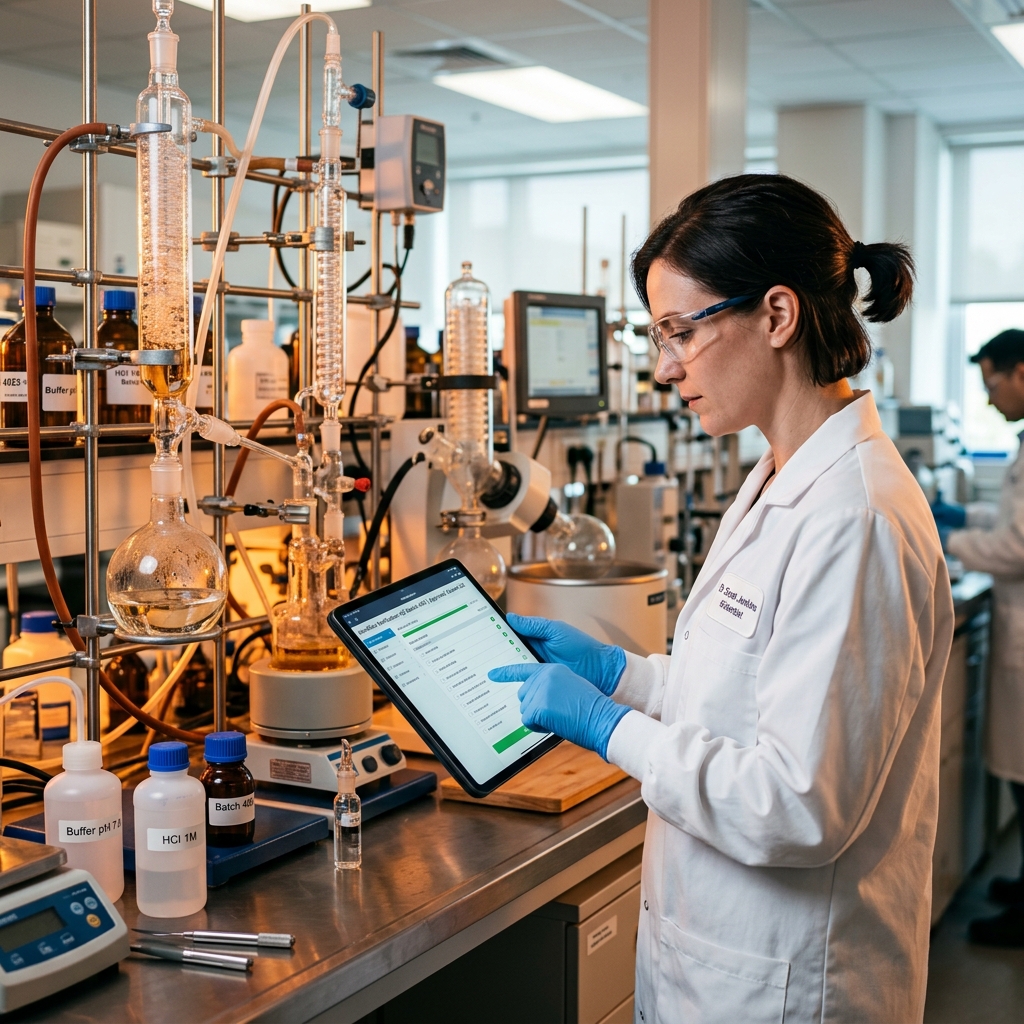

Two Businesses, One Laboratory
A commercial testing laboratory runs two operations simultaneously. One is scientific: chemical, microbiological, and contaminant testing under accreditation, with the same audit burden a pharmaceutical facility carries. The other is commercial: a continuous cycle of client inquiries, rate quotations, job acceptance, and invoicing.
Most laboratories run these on separate systems. Testing lives in the LIMS; the commercial cycle lives in spreadsheets, email, and eventually the ERP. The gap between them is filled by people, monthly, matching testing activity against invoices.
What Rising Volume Exposes
Contract testing volumes tend to grow faster than manual workflows can absorb, and four pressures surface together.
Throughput. Sample login, work allocation, and report turnaround bottleneck when spreadsheets are the coordination mechanism.
Traceability. Transcribing results from chromatography, spectroscopy, and balance instruments into spreadsheets by hand leaves no defensible instrument-to-report chain of custody.
Compliance across sites. Each laboratory needs department-wise approval hierarchies, digital signatures, and audit trails satisfying accreditation and customer audits - while still accommodating country-specific requirements, which do not politely align across borders.
Disconnected commerce. When inquiries, quotations, and billing sit outside the laboratory system, sales, operations, and finance work from separate records and reconcile them manually.
Throughput: Remove the Repetitive Decisions
High-volume laboratories gain most from automating decisions that are made hundreds of times a day. Automatic accession number generation gives every sample a unique trackable identity at intake. A flexible test matrix with group tests and specification limits lets staff attach a full panel to a sample in one step instead of selecting tests individually. Automatic allocation of instruments and analysts to incoming work removes manual scheduling, which is usually the first thing to break under load.
The result is a laboratory that absorbs volume growth without headcount growing in proportion.
Traceability: Capture at the Instrument
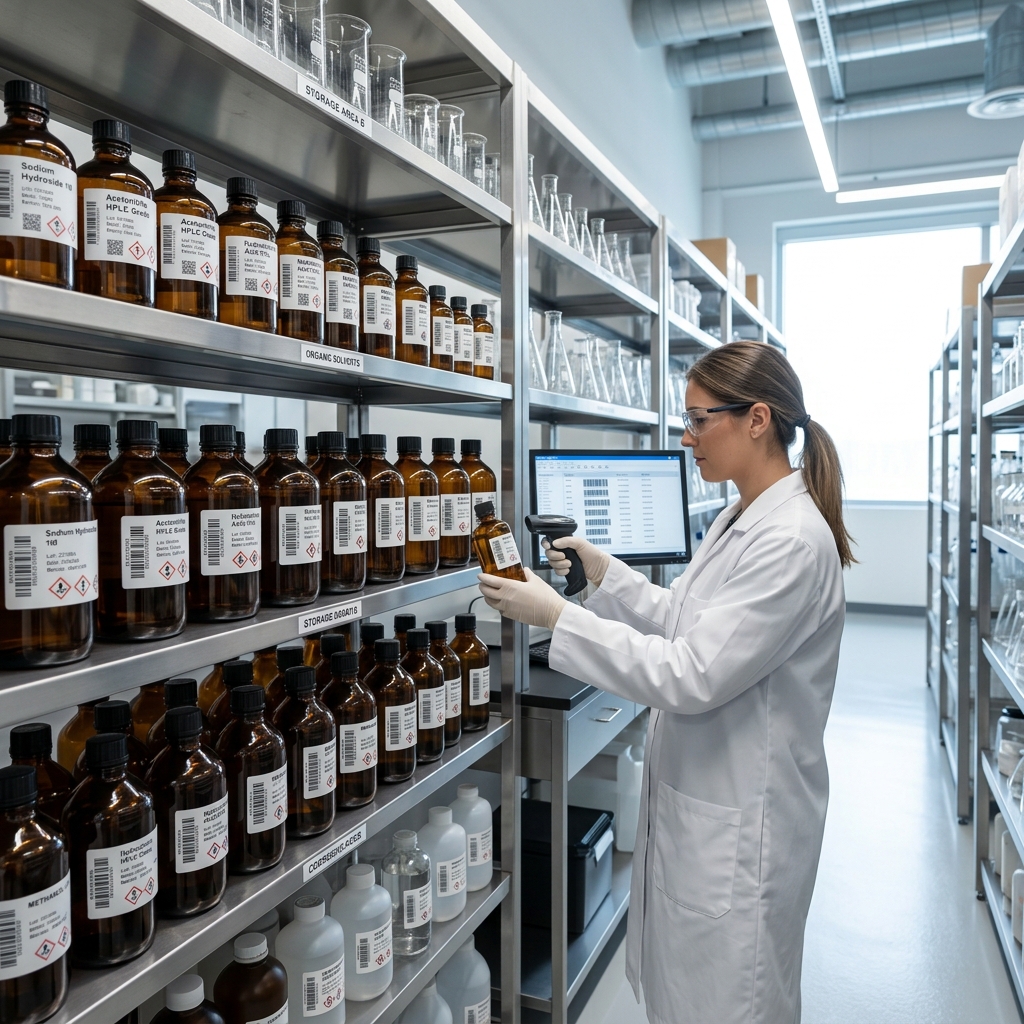
An instrument interfacing layer connecting GC, GC-MS, HPLC, and balances captures results through barcode or QR-linked transfer rather than manual entry. Every action and record is logged and time-stamped, producing a fully auditable trail of the scientists, instruments, standards, and procedures behind each analysis, from receipt to certificate of analysis.
On-screen specification limits with out-of-specification indicators at the point of results entry matter more than they appear. Catching an OOS as the result is entered, rather than at review, changes the cost of the deviation - the analyst is still at the bench, the sample is still available, the context is still fresh.
Compliance Without Fragmenting the Platform
Role-based administration enforces prepared-by and approved-by sign-off with department-wise routing - chemistry and microbiology approving through their own hierarchies - before any certificate of analysis is released. Digital signatures validate authenticity and integrity of released results, and automated email distribution shortens delivery to the client.
Multi-country operation is where platforms usually fracture. One site may require an electronic lab notebook and enhanced track-and-trace reporting; another may need statutory e-invoicing filed through a government API. The correct pattern is local extensions on a common core, not a separate system per country. Everything that can be shared stays shared; only genuinely jurisdictional requirements are configured locally.
Bringing the Commercial Cycle Inside
The step most laboratories skip is putting inquiry, quotation, and billing into the LIMS itself. Client inquiries are logged and converted into rate-based quotations, with rate imports keeping pricing current without manual re-entry. Approved quotations flow directly into sample registration, so an accepted job carries its commercial terms into the laboratory with no handoff between sales and operations.
Billing is then generated from completed, approved testing activity and posted into SAP, which means invoices reflect work actually performed. The monthly reconciliation between laboratory records and finance records stops being necessary, because both are derived from the same source.
One Backbone, Multiple Countries
Integrating with the enterprise through a web-services API layer lets sample activity, quotations, and billing flow into SAP for invoicing, consumable inventory, and financial reporting - giving management real-time visibility into throughput alongside cost and revenue. A cloud-ready architecture over a wide-area network allows laboratories in different countries to share one backbone while each retains on-premise, hosted, or SaaS deployment as local IT policy requires.
The lesson for contract labs is straightforward. The science and the commerce are one workflow in reality. Modelling them as one workflow in software removes the reconciliation that otherwise sits between them permanently.